Caring for Miami’s Mobile Food Market offers groceries, dignity and the gospel
Written By: Keila Diaz

MIAMI–When the big blue bus pulls into a school, clinic or church campus, a line is already forming. Volunteers in bright shirts bow their heads to pray with anyone who asks. Then the doors open—and people begin moving through what looks like a public grocery store on wheels, one shopping basket at a time.
For Caring for Miami’s Mobile Food Market, food is the invitation—but the gospel is the goal.
Caring for Miami is an initiative by Christ Fellowship Church.
“We meet physical needs, but most importantly, we share the hope of Jesus,” said Hannah Ulloa, volunteer and administrative coordinator for Caring for Miami.
“Wherever there’s food, there’s a line. We steward that moment to love people, preserve their dignity, and point them to Christ.”
A bus, a vision, and a bridge
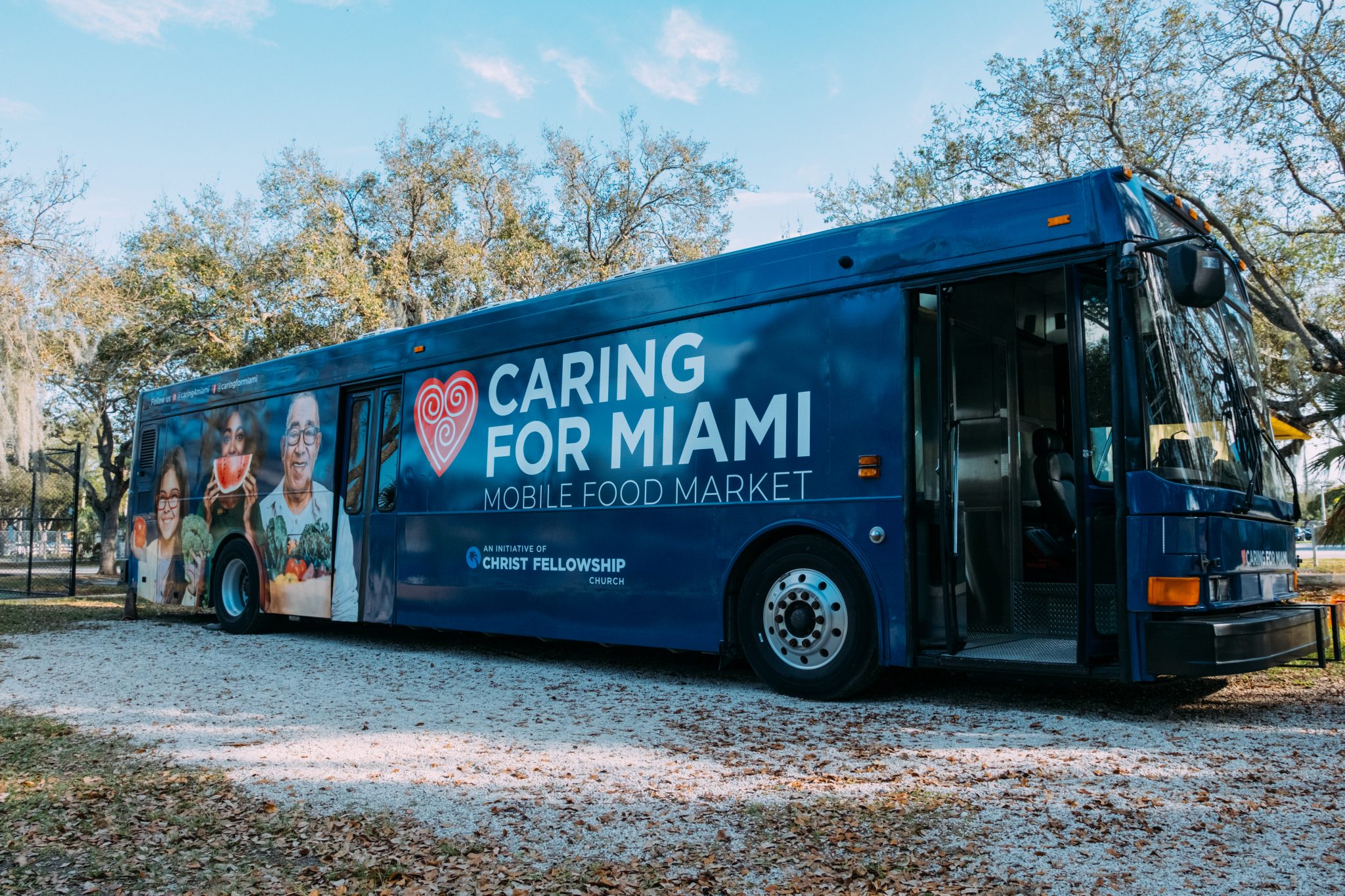
The Mobile Food Market launched in February 2024 after Miami-Dade’s transit system donated a 40-foot Metrobus that Caring for Miami completely retrofitted into a single-aisle market. The ministry grew from Christ Fellowship’s long-running mobile dental outreach; leaders recognized that oral health and nutrition are linked—and that food distribution could become a powerful bridge to spiritual conversations.
Ulloa first served as a dietetics intern while studying nutrition at Florida International University, building the program’s practical backbone:
“It was a dream,” Ulloa said. “I was learning community nutrition in class—and practicing it in real time for my neighbors.”
How it works
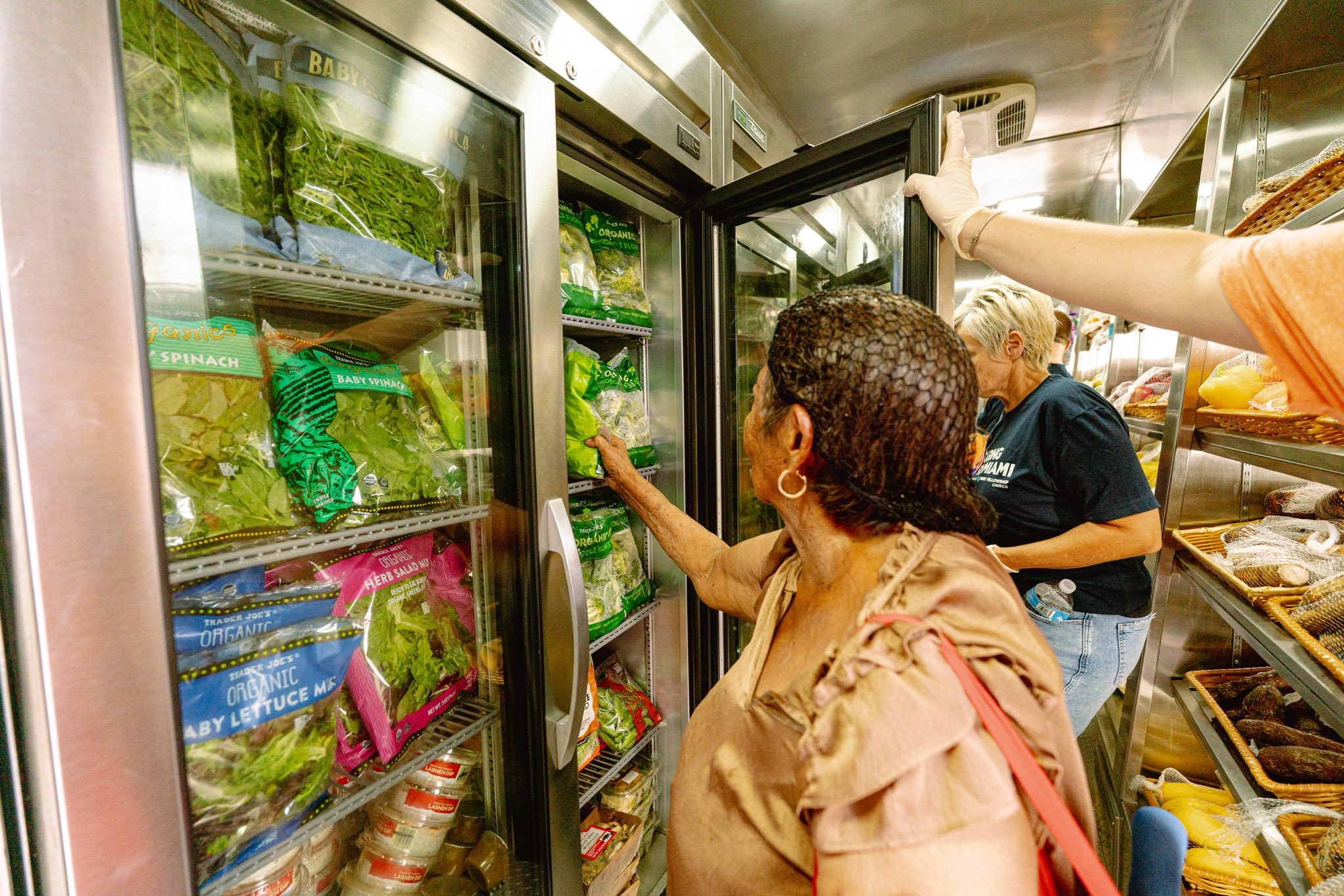
The market runs three days a week (Tuesdays, Thursdays and Saturdays) across 12 recurring sites monthly, including food deserts–communities where residents have limited access to affordable, healthy food–identified by mapping, backpack-program schools, senior adult centers, clinics, and Christ Fellowship campuses. Partners such as Trader Joe’s, Mac Edwards Produce, and J&C Tropicals supply donated food that volunteers sort for quality.
All guests get a personal shopper—a volunteer who walks with them, answers questions, and prays if requested. Guests choose what they take (no prepacked boxes), check out at a bagging table, and receive help to their cars. The average stop serves about 70 families, often with four or more people per household, with some events topping 150 families.
“Choice matters,” Ulloa said. “Letting people select their own food preserves dignity—and opens hearts.”
Powered by volunteers (and reaching them, too)
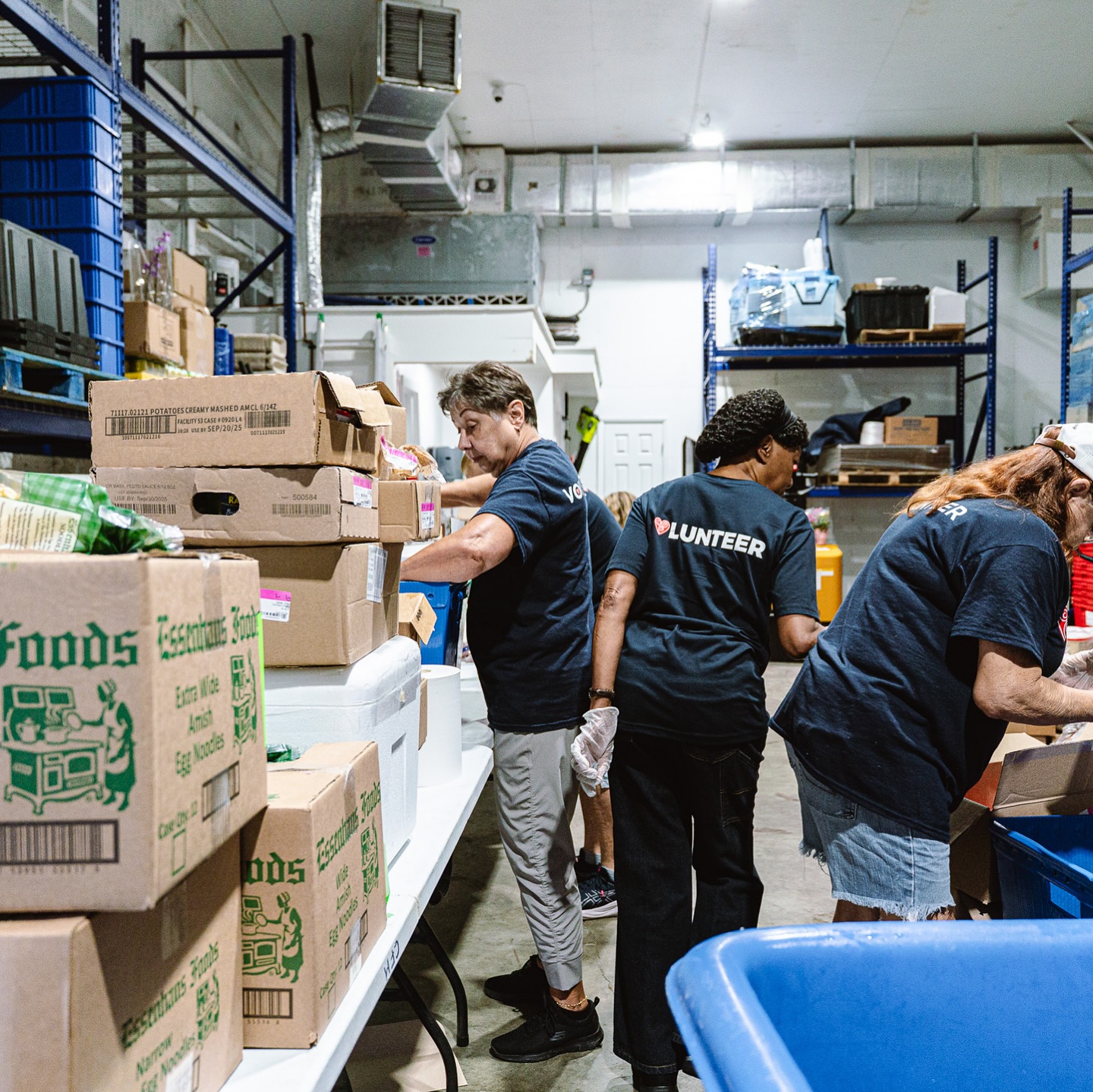
Caring for Miami has tracked approximately 1,100 active volunteers in the past year. The Mobile Food Market itself is staffed almost entirely by volunteers under a single full-time coordinator.
And the bridge goes both ways. “Not all our volunteers are believers,” Ulloa noted. “Some find us by searching ‘where to volunteer’—and end up invited to church after serving. God uses service to draw them, too.”
Faces that change
One volunteer, Bridget, puts it simply: “People arrive with heavy faces—and leave smiling.”
Ulloa sees it often: A mom in tears at Homestead Senior High School who said free groceries mean she could finally provide a full meal for her kids that week, or senior adults at WellMed locations who feel seen, prayed for, and cared for, or lines that start for food but linger because someone stopped to listen and pray.
Next step: Spiritual follow-up
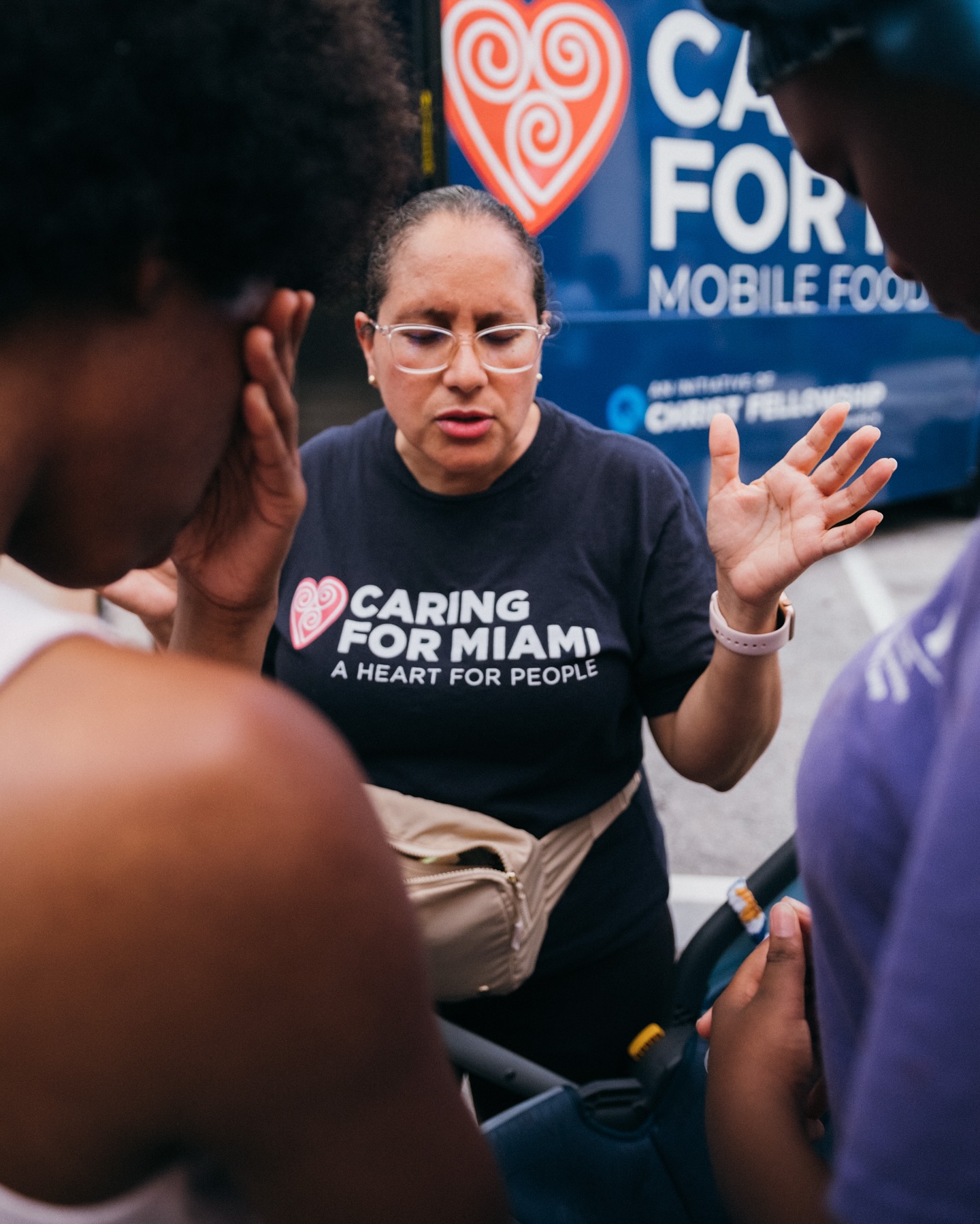
Prayer happens at every site, but the team is formalizing a spiritual care team—core volunteers trained to present the gospel clearly and follow up after the event (calls, texts, church invitations, next steps in faith). “We already collect contact info for reporting,” Ulloa said. “Now we’ll use it to continue pastoral care beyond the curb.”
“We meet physical needs, but most importantly, we share the hope of Jesus.”
The road ahead
Scaling will take more leaders, more volunteers and, Lord willing, a second bus. “We’re at capacity on some days,” Ulloa admitted. “A second unit would let us serve two communities at once.” Until then, the market will keep rolling—three days a week, rain or shine—turning a practical need into a moment of eternal significance.
“Jesus said when we feed ‘the least of these,’ we do it unto Him,” Ulloa said. “Food gets people to the door. The gospel changes everything once they’re inside.”


